

![[object Object]](/media/2025/12/exodus-1.jpg?w=1920)
I've tested dozens of cryptocurrency wallets while bouncing between Lisbon cafés and Bali co-working spaces. After years of managing crypto across multiple continents, the Exodus crypto wallet keeps earning its spot on my devices. This comprehensive Exodus wallet review breaks down everything from security features to fees—no hype, just practical insights from someone who actually uses this software daily.
Whether you're stacking Bitcoin in a Tokyo apartment or managing altcoins from a beach in Thailand, understanding your wallet choice matters. This wallet has become a go-to for millions of users since 2015. But is Exodus a good wallet for your specific needs? The crypto landscape shifts rapidly, and what worked last year might not cut it today. With this honest review, I'll help you make an informed decision.
Full disclosure: I've been using crypto wallets since 2017 and have personally managed assets through Exodus for over three years. My perspective comes from genuine use across different market conditions—bull runs, bear markets, and everything in between. Let's dive into what makes this wallet tick.
Pros and Cons of Exodus Wallet
Before diving deep into features, here's a quick snapshot of what you'll love and what might make you pause. This table summarizes my hands-on experience with the Exodus crypto wallet across multiple platforms.
- Supports 350+ cryptocurrencies across 50+ blockchain networks
- Intuitive interface perfect for beginners and experienced users
- Built-in exchange for seamless asset swaps
- Hot wallet with inherent online security risks
- Swap fees include 2-5% spread above market rates
- No native two-factor authentication
What Is Exodus Wallet?
Exodus is a non-custodial cryptocurrency wallet launched in 2015 by JP Richardson and Daniel Castagnoli. Richardson, a prolific developer who has contributed code still used in the Bitcoin network today, brought deep technical expertise to the project. Castagnoli provided the design vision that has become Exodus's signature feature—an interface that actually looks good.
The platform lets users store, manage, and exchange digital assets while maintaining complete control over their private keys. Unlike centralized exchanges that hold your funds (and can freeze them at will), Exodus encrypts everything locally on your device. Your keys, your crypto—that foundational principle attracts users who value self-sovereignty.
The company achieved a significant milestone in April 2021 when the SEC approved their Class A common stock offering (OTCBB: EXOD). This regulatory recognition adds credibility in a space often plagued by questionable projects. Recent financial reports show strong performance, with Q2 2025 revenue hitting $25.8 million and the company reporting $291.2 million in digital and liquid assets.
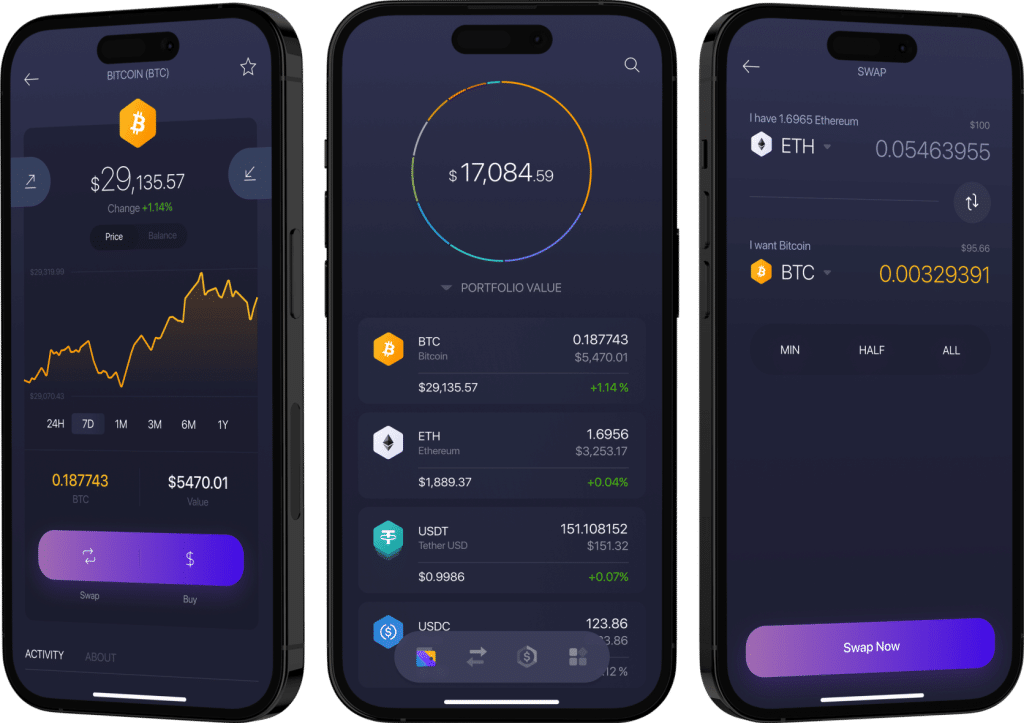
The wallet operates across desktop (Windows, macOS, Linux), mobile (iOS and Android), and as a browser extension. This flexibility means you can check your portfolio from an airport lounge in Dubai or execute a swap while waiting for your coffee in Melbourne. Your wallet syncs seamlessly across all devices, maintaining a consistent experience wherever you connect.
Key Features That Set Exodus Apart
Multi-Asset Support
The Exodus Bitcoin wallet extends far beyond BTC. Current support includes over 350 cryptocurrencies spanning 50+ blockchain networks. From major players like Ethereum, Solana, and Cardano to trending meme coins, the coverage handles most portfolios. Users can also add custom tokens on supported networks—a feature I frequently use when tracking new DeFi projects.
The Exodus mobile wallet mirrors desktop functionality perfectly. Portfolio tracking feels smooth on both platforms, with real-time price updates and clean visual charts. For someone constantly moving between devices, this consistency matters more than you might expect.
Built-In Exchange
The integrated Exodus exchange removes the need for third-party platforms. Select your trading pair, confirm the rate, and execute—all without leaving the app. While Exodus fees on swaps include a spread of 2-5% depending on market conditions, the convenience factor often outweighs the premium for smaller transactions. No KYC verification, no account creation—just peer-to-peer trading at its simplest.
Staking Rewards
Passive income opportunities exist directly within the wallet. Stake Cosmos (ATOM) for approximately 19% APY, Solana (SOL) around 7%, or choose from other supported assets like Cardano, Tezos, and VeChain. The process takes just a few clicks.
Web3 and NFT Integration
The platform includes a Web3 browser for interacting with decentralized applications. Connect to DeFi protocols, NFT marketplaces, and emerging blockchain services directly from your wallet. The built-in NFT gallery displays your collections with proper rendering—no more checking OpenSea separately.
This integration transforms Exodus from a simple storage solution into a gateway for the broader crypto ecosystem. Whether you're minting NFTs, providing liquidity, or exploring new protocols, the wallet serves as your single point of access.
Security: Is Exodus Wallet Safe?
Security remains the burning question for any wallet review. So, how safe is Exodus wallet for storing your crypto? I've dug deep into this question, examining both the technical implementation and real-world incidents.
This crypto wallet employs AES-256 encryption—the same standard used by government agencies—to protect your private keys. These keys never leave your device and are never transmitted to Exodus servers. A 12-word recovery phrase serves as your backup; lose it, and your funds become permanently inaccessible. This isn't a bug—it's a feature of true self-custody.
The wallet supports biometric authentication (Face ID, fingerprint) and PIN protection on mobile devices. An auto-lock feature adds another layer by requiring authentication after periods of inactivity. While these measures create friction, that friction protects you if someone gains physical access to your device.
For enhanced protection, Exodus integrates with Trezor and Ledger hardware wallets. This combination delivers the sleek Exodus interface with the cold storage security of dedicated hardware. If you're holding significant amounts, this hybrid approach makes sense. Your private keys stay on the hardware device while you enjoy the platform's superior user experience.
The honest reality: Exodus is a hot wallet, meaning it connects to the internet. While perfectly suitable for active trading and moderate holdings, serious long-term storage benefits from dedicated cold wallet solutions. The lack of two-factor authentication (2FA) represents a notable security gap compared to competitors like Trust Wallet and Coinbase Wallet. This omission surprises many users given Exodus's otherwise polished approach.
Exodus Fees Explained
Understanding the pricing requires separating different fee types:
- Network Fees: Blockchain transaction fees paid to miners/validators. These fluctuate based on network congestion and go entirely to the network—Exodus takes nothing.
- Swap Spreads: Built-in exchange transactions include a 2-5% spread. Higher than centralized exchanges but competitive for the convenience offered.
- Account Fees: None. Downloading, holding crypto, and receiving funds costs nothing.
Exodus vs Trust Wallet vs Coinbase Wallet
How does the platform stack up against the competition? The Exodus vs Trust Wallet debate comes up constantly in crypto circles, as does the Exodus vs Coinbase comparison. Here's an objective breakdown.
| Feature | Exodus | Trust Wallet | Coinbase Wallet |
|---|---|---|---|
| Supported Assets | 350+ across 50+ networks | 10M+ tokens | Thousands (ERC-20 focus) |
| Platforms | Desktop, Mobile, Browser | Mobile, Browser | Mobile, Browser |
| Open Source | No | Yes | Partial |
| Hardware Integration | Trezor, Ledger | Limited | Ledger |
| Customer Support | 24/7, <60 min response | Community-based | Email support |
Trust Wallet wins on raw token support and open-source transparency. Coinbase Wallet excels for deep DeFi integration and those already embedded in the Coinbase ecosystem. But Exodus delivers the most polished experience for users who want simplicity without sacrificing functionality—especially with its desktop application and superior customer support that actually responds within an hour.
The desktop app remains Exodus's secret weapon. While competitors focus exclusively on mobile and browser extensions, Exodus gives power users a full-featured application that feels native on Windows, Mac, and Linux. For anyone managing serious portfolios, this matters.
Who Should Use This Crypto Wallet ?
It shines brightest for specific user profiles:
- Crypto newcomers who need an intuitive interface without overwhelming options
- Portfolio diversifiers managing multiple cryptocurrencies across different networks
- Active traders who value convenience over minimal exchange fees
- Desktop users wanting a full-featured application beyond mobile or browser
Power users focused purely on DeFi might prefer MetaMask. Those prioritizing maximum security for large holdings should consider hardware wallets like Ledger or Trezor as primary storage.
Getting Started With Exodus
Setup takes under five minutes:
- Download from exodus.com or your device's app store
- Create a new wallet (no email or personal information required)
- Secure your 12-word recovery phrase—write it down and store offline
- Set up PIN or biometric protection
From there, deposit crypto, explore the exchange, or stake supported assets. The learning curve approaches zero.
Final Verdict: Is Exodus Worth It?
After years of testing wallets across continents, Exodus remains installed on every device I own. It strikes an ideal balance between accessibility and functionality that few competitors match. The interface actually makes checking your portfolio enjoyable—not a trivial detail when you're doing it daily from different time zones.
Is Exodus legit? Without question. The team continues pushing updates, recently adding Monad and Hyperliquid support, while maintaining responsive customer service. For the borderless crypto lifestyle, where you need reliable access from anywhere, yhe crypto wallet platform delivers. Their acquisition of Grateful, a Uruguay-based stablecoin payments company, signals continued expansion into practical crypto use cases.
The wallet has earned strong ratings across platforms—4.6 stars on the Apple App Store from over 33,000 reviews and 4.5 stars on Google Play from 128,000+ users. These numbers reflect genuine user satisfaction, not marketing hype. Trustpilot shows a more mixed 3.9 rating, though many negative reviews relate to market volatility rather than wallet functionality.
The caveats matter too. Don't store your life savings here—use hardware integration or dedicated cold storage for that. Accept the swap fee premium as the cost of convenience. And stay vigilant with your recovery phrase; write it down, store it offline, and never share it with anyone claiming to be support.
Bottom line: Exodus is an excellent cryptocurrency wallet for daily operations, multi-asset management, and users who prioritize experience design. Whether you're just entering the crypto space or managing a diverse portfolio while traveling the globe, this wallet earns its reputation as one of the best multi-cryptocurrency wallets available in 2026.
Frequently Asked Questions
Is Exodus Wallet Safe?
Exodus provides solid security through AES-256 encryption and local key storage. As a hot wallet, it's suitable for active use and moderate amounts. For maximum security, pair it with integrated hardware wallets like Trezor or Ledger.
Is Exodus a Cold Wallet?
No, Exodus is a hot wallet that maintains an internet connection. It integrates with Trezor and Ledger cold storage devices for users requiring offline security for larger holdings.
Can I Withdraw Crypto From Exodus Wallet?
Yes, you can send any supported cryptocurrency to external wallets or exchanges. Simply enter the recipient address, specify the amount, and confirm. Standard network fees apply based on blockchain congestion.
![[object Object]](/media/2025/12/Crypto.com-wallet.jpg?w=1920)
![[object Object]](/media/2025/12/coinbase-wallet.jpg?w=1920)
![[object Object]](/media/2025/12/zengo-wallet.jpg?w=1920)
![[object Object]](/media/2025/12/Safepal-Wallet.jpg?w=1920)
![[object Object]](/media/2025/12/coinomi-wallet-review.jpg?w=1920)
![[object Object]](/media/2025/12/electrum-wallet-1.jpg?w=1920)