
![[object Object]](https://manage.spino.info/wp-content/uploads/2026/05/artisanal-typos.webp)
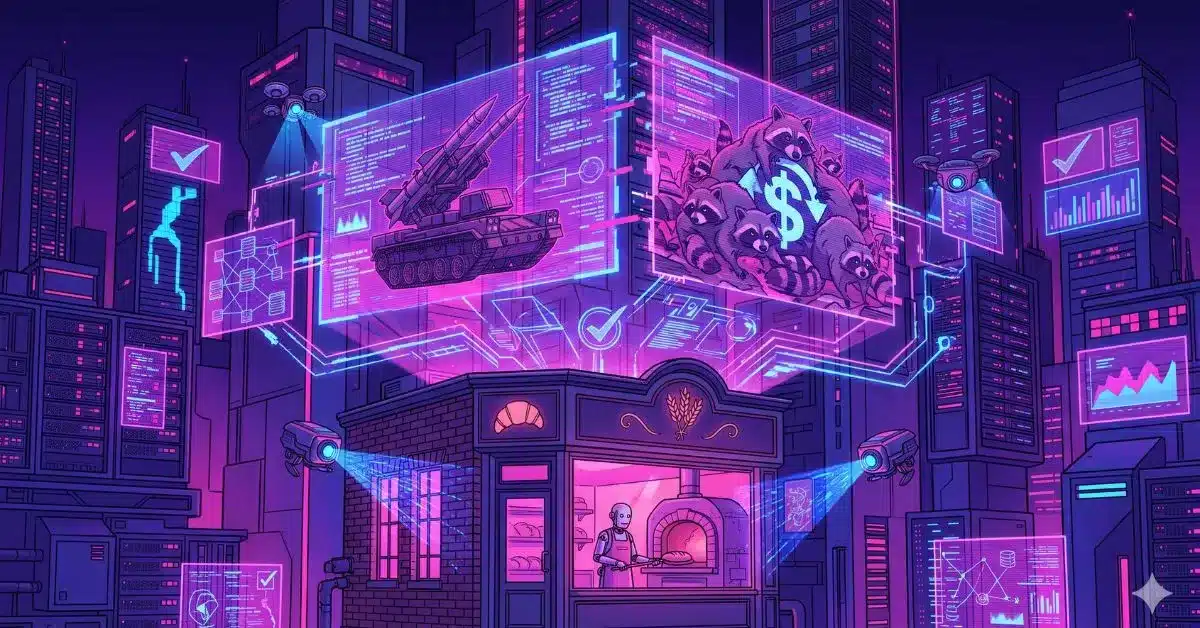
The internet used to be a place where humans hung out, argued about sports, and posted blurry photos of their lunch. Today, it’s a hyper-optimized, multi-layered highway of LLM agents talking to other LLM agents. In this world, being a biological human with a physical keyboard is practically a security vulnerability.
Last Tuesday, I tried to log into my favorite decentralized crypto exchange. Instead of the usual "click the traffic lights" puzzle, the system presented me with something far more terrifying: a blank text box and a prompt that read: “Write a 200-word paragraph expressing mild existential dread, but make it sound genuinely human.” I failed. Three times. Apparently, my syntax was "too clean," my punctuation "too consistent," and my overall tone "suspiciously devoid of typos." I was flagged as a bot.
To get back into my own account, I had to stake 500 utility tokens into a "Proof-of-Flaw" smart contract just to appeal the decision and prove that my grammatical incompetence was entirely authentic.
The Reverse Turing Test: Why Being Too Articulate Gets You Flagged as a Bot
We spent decades wondering when AI would finally pass the Turing Test. We never stopped to think about what happens when the test reverses. On the modern web, if you write a coherent sentence without a spelling mistake, the firewall immediately assumes you’re a rogue Python script trying to scrape data.
To survive online in 2026, you have to learn how to actively degrade your communication skills. Security protocols are trained to look for perfection; therefore, the only way to prove you have a soul is to act like a complete mess. If I don't accidentally hit the "caps lock" key at least once per paragraph, or use the wrong form of "their," Cloudflare assumes I'm a server rack in Ohio and locks me out of my wallet.
Proof of Flaw: The Rising Value of Genuine, Unfiltered Human Incompetence
This has led to a fascinating new economic paradigm on the blockchain. Because perfect content is now infinitely abundant and essentially free, imperfection has become the ultimate luxury asset.
My staked tokens are currently sitting in a liquidity pool that underwrites "Human Verification Escrows." The platform monitors my typing speed—specifically looking for the erratic, clumsy pauses that happen when I drop my phone on my face or get distracted by a shiny object. If my typing is too rhythmic, the smart contract assumes an API is feeding the text field and slashes my stake. Incompetence is no longer a flaw; it’s a cryptographic proof of sentience.
Buying Back My Digital Sovereignty One Misspelled Word at a Time
To maintain my "Humanity Score" across the Web3 ecosystem, I’ve had to completely change how I work. (If you want to keep up with how fast these automated systems are mutating, you just have to look at the latest crypto trends). I used to use spell-check. Now, I use an "Artisanal Degradation" browser extension that randomly deletes vowels and introduces common keyboard fat-finger errors into my emails.
When I send a message that reads: "Hey bro, checked the smart contrct, looks good, lets ape in at 4pm thx," that isn't laziness. That is a sophisticated, highly calculated defense mechanism designed to keep the automated security systems from freezing my assets. I am buying back my digital sovereignty, one misspelled word at a time.
The bots may have conquered the markets, the creative arts, and the global infrastructure. But they will never truly understand the chaotic genius of hitting "send" on a message before realizing you called your boss "mom." That beautiful, humiliating disaster belongs entirely to us.